Press Release · Huawei
Huawei Unveils Senegal Grid-Forming Energy Storage White Paper at Northern Africa Inclusive Energy Summit
Distributed by Times Beats · Originally issued via PR Newswire
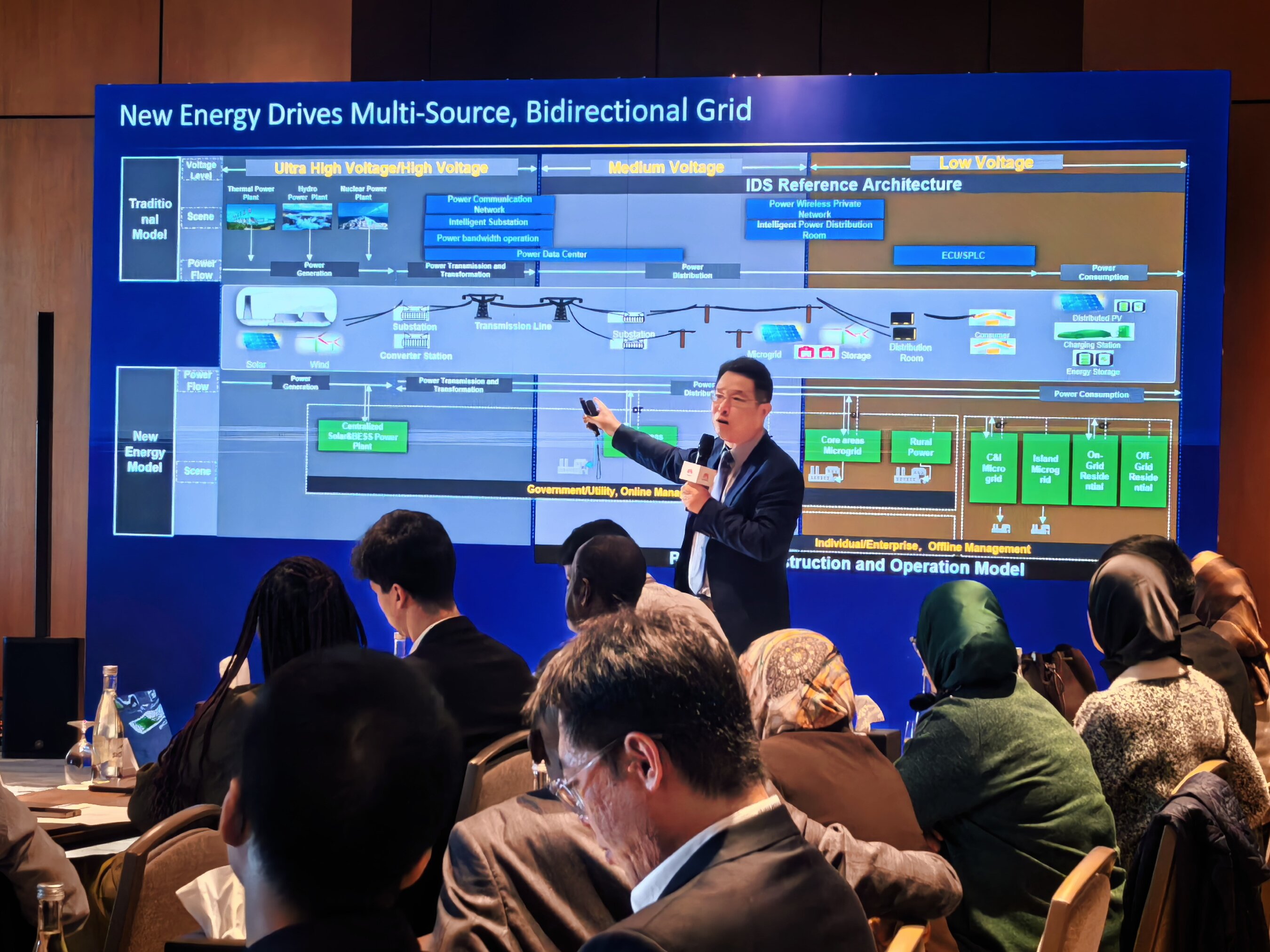
RABAT, Morocco, Nov. 27, 2026 — The Huawei Northern Africa Inclusive Energy Summit 2026 was held in Rabat, Morocco. The summit brought together over 300 participants, including government representatives from across Africa, energy industry leaders, and ecosystem partners, to jointly explore Africa's energy transition. At the event, Senegal's Senelec, in collaboration with Huawei and other partners, launched the White Paper on Grid-Forming Energy Storage Technology in Senegal, marking a significant milestone in the deployment of grid-forming energy storage solutions in Senegal and providing a practical and actionable roadmap for the country's energy transformation.
The white paper addresses key challenges facing African power grids: as renewable energy penetration exceeds 30 percent, traditional grids face instability due to reduced system inertia and short-circuit capacity. Grid-forming battery energy storage systems (GFM BESS) can provide voltage and frequency support—capabilities that traditional grid-following systems cannot offer—enabling stable operation of power systems with high shares of renewable energy. Jacky Wang, Vice President of Huawei Electric Power Digitalization BU, and other key stakeholders attended the launch ceremony.
In his keynote address, Eng. Abel Didier Tella, Director General of APUA, underscored that over 560 million people in sub-Saharan Africa still lack access to electricity and that achieving universal access by 2030 requires three times the current annual electrification pace. "Digital and intelligent transformation is no longer an option—it is the foundation for universal access, utility sustainability, and Africa's energy future," Tella stated. He emphasized that photovoltaic and battery energy storage represent among the world's most cost-competitive generation resources, while grid-forming technology is key to maintaining stability as renewable share grows.
Zhang Genzhou, Former CIO of State Grid Shaanxi presented China's Shaanxi experience in addressing distribution grid challenges amid explosive growth of distributed PV, EV charging infrastructure, and new energy storage. In Shaanxi, renewable capacity reached 51.3 percent of total installed capacity, surpassing thermal power for the first time, while distributed PV grew 7.6-fold and EV chargers increased 14-fold over five years. Rather than relying solely on costly capacity reinforcement, Shaanxi pursued a digital-first strategy: equipping 180,000 transformer areas with edge sensing terminals, dual-mode communication, and AI-driven operations. Results include fault location time reduced from 42 minutes to 5 minutes, average restoration time cut from 3.6 to 1.9 hours, complaint rates down 34 percent, and O&M costs reduced by 32 percent. Zhang recommended that African utilities prioritize minimum viable sensing and communication, adopt unified standards, leverage centralized monitoring with local operations, and focus initially on loss reduction and reliability improvements—building toward a distribution grid that can sense, analyze, and act autonomously.
Looking ahead, Huawei will continue to work with governments, power utilities, and ecosystem partners across Africa to translate national energy strategies into concrete action through digital and intelligent transformation, helping build a more inclusive, reliable, and sustainable energy future for the continent.